‘Healing’ Chickens vs. Hungry Thieves: Art Students’ Project Ends in Tears
The thieves came in the dead of night in late August — seven ghostly figures illuminated only by the glow of their flashlights and burning cigarettes. When they left, tucked under their arms were 10 chickens and two geese.
The next day, watching footage of the theft recorded by a security camera, Xu Lingni’s heart sank. It was the end of a dream.
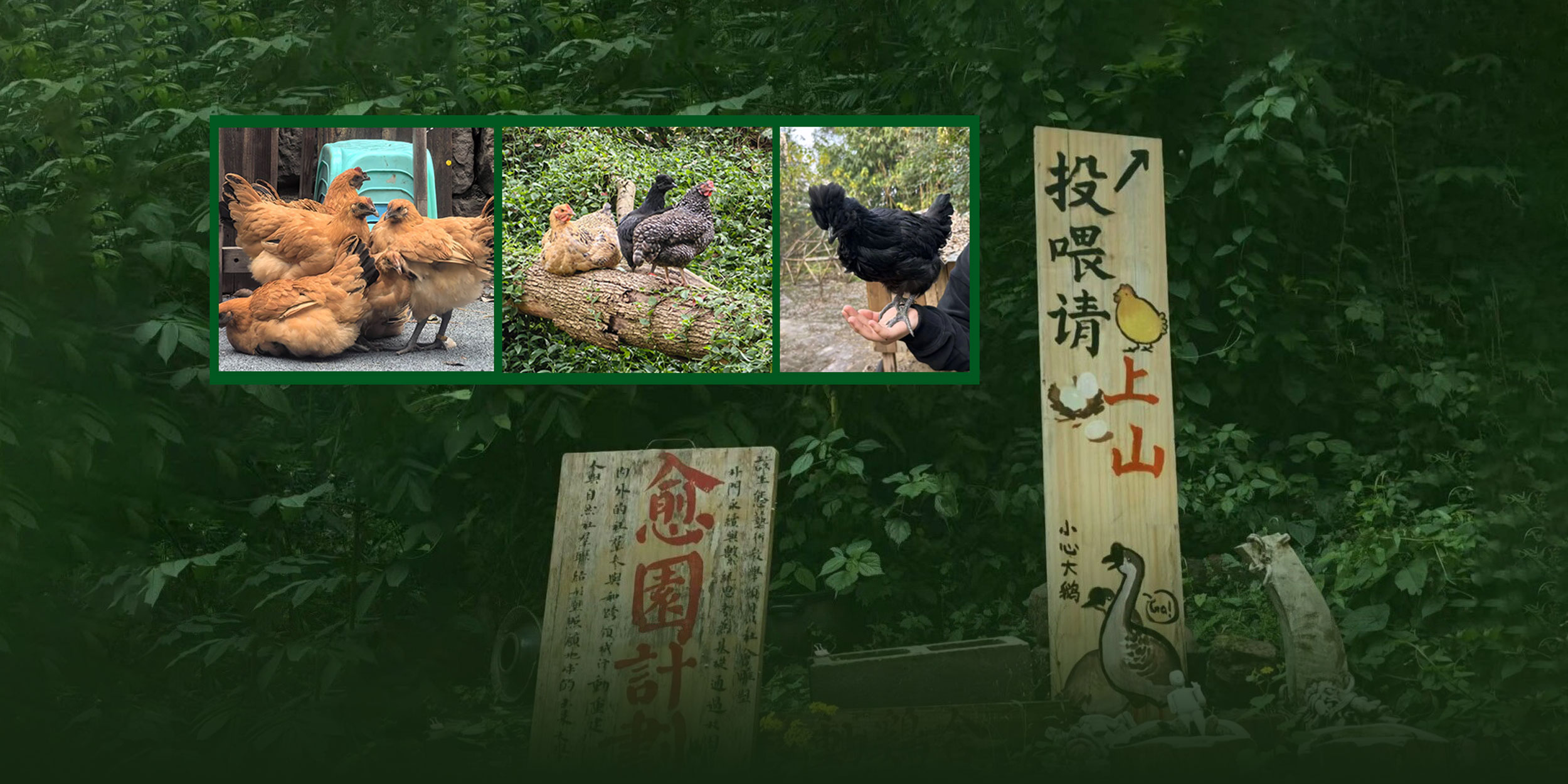
The poultry had been kept overnight in a hilltop coop at the bucolic Huxi campus of the Sichuan Fine Arts Institute (SCFAI), in the southwestern megacity of Chongqing, and belonged to the Happy Chick Feeding Cooperative, a student-led club aimed at rebuilding the bonds between humans and nature.
The group had intended to use the project to promote interest across campus and beyond in food-waste conversion, community-supported agriculture, plastics consumption, and other sustainability issues.
For Xu, the club’s leader, those plans vanished along with those 12 birds. Yet worse was to come.
After a brief investigation, the Chongqing police discovered that several workers hired by SCFAI for a summer construction project had taken the poultry and eaten them. Their crew manager agreed to pay 7,000 yuan ($1,040) to compensate for the financial loss and the students’ emotional distress.
However, the theft drew widespread attention and sparked fresh criticism over raising animals on campus. Facing mounting pressure, the school’s leadership decided to ban the practice. The cooperative was over.
Hatching a plan
The Happy Chick Feeding Cooperative was a key part of the Healing Garden Project, which inhabits a patch of land on campus once piled high with construction waste. Seven years ago, Jin Lipeng, an associate professor in SCFAI’s School of Experimental Art, led students in repurposing the debris to pave paths and build planting beds. He envisioned an area that could restore nature and nurture people.
At the time, the campus cafeteria was sending hundreds of kilograms of food scraps — often mixed with unsorted plastic waste — to an incinerator dozens of kilometers away. Jin and his students began to use these leftovers as compost, converting roughly 40 tons of food waste into fertilizer over the years.
The idea for the cooperative stemmed from a graduate student’s thesis project in spring 2025 that looked at permaculture and the role of foraging chickens in loosening soil, eating pests, clearing weeds, and providing eggs. To test a theory, the student purchased five chickens of a local breed with red combs and black skin. They were allowed to roam freely through campus and returned at night to their hilltop coop.
Xu, an undergraduate majoring in sculpture, was already involved in the garden project and began informally caring for the chickens, buying them grain and taking them to the veterinarian.
In summer last year, as temperatures soared above 40 degrees Celsius, one bird died of heatstroke, and three others disappeared. Fearing that the sole survivor would get lonely, Xu bought a new one from the market. Then one of the escapees returned.
A few days later, Xu found six new adolescent chickens in the coop. A school janitor, who had bought them to raise for their meat, agreed to sell the birds to the students. These were soon joined by a common chicken brought from a roadside stall, a Plymouth Rock chicken, a new hatchling, and a wuhei black-boned chicken. (Two birds died before the theft — one from hypothermia, the other from a wild animal attack. The wuhei chicken was the only one left behind by the thieves; its dark plumage likely made it hard to spot at night.)
As the flock grew, the birds began producing more eggs than the students could eat. Jin, whose research area includes labor issues, proposed creating the cooperative as a student club and asked Xu to lead it. Soon, the students were dividing up their responsibilities: caring for the animals, sourcing and selling merchandise, writing articles, and managing social media channels. In June this year, several attended an international conference to introduce the cooperative’s work.
Those who joined the project felt that caring for the chickens brought them “healing energy.” Xu recalls one classmate who would often hold the birds and cry. “The theft this summer hit her especially hard, and she wasn’t the only one,” Xu says, adding that the cooperative not only fostered friendships but also helped some members find meaning.
While she doesn’t exactly share Jin’s grand ideals, Xu believes that through her work she came to understand seemingly distant but deeply personal issues such as permaculture and climate change.
“Most university students have no idea where eggs come from, what happens to food waste, or why rubbish gets incinerated,” she said in a speech at a climate change forum in May. “Dorm rooms are piled with takeout plastic. Delivery workers risk heatstroke in extreme temperatures. Yet few students have enough awareness to connect these to drought, heat, and carbon emissions.
“Our work lets people feel the pressure and causes of climate change firsthand,” she added, “and shows that through campus community-supported agriculture we can mount a small resistance.”
Making a mess
The cooperative began selling eggs for about 2 yuan each to residents on and around campus this March. The chickens laid two to eight eggs a day. Xu stored them in her apartment’s refrigerator, took orders through an online group chat, and delivered them to customers on her electric bike. She calculates that this brought in just over 500 yuan in total.
Fans of the project were kept up to date through the club’s channel on the lifestyle platform Xiaohongshu, or RedNote, which has more than 6,300 followers. In addition, the cooperative sold themed merchandise including fridge magnets, tote bags, and silk scarves, which brought in about 2,000 yuan.
Not everyone was supportive, though. The most common complaint was that the free-roaming chickens often defecated on the pathways and at the entrance to the student dormitories. To prevent this, this summer the birds were fenced in on the hillside.
In 2022, Chongqing introduced regulations prohibiting the raising of livestock and poultry in urban areas. However, the restrictions apply only to commercial-scale farming, while exceptions can be made for educational purposes and scientific research.
While the number of chickens at SCFAI was far below commercial scale, the activity fell outside the definition of “backyard rearing,” putting it in a gray area. As such, the school took an open-minded approach, requiring only proper fencing and separation, despite repeated objections from others in the campus community.
The cooperative used old bamboo posts and tall netting to enclose the poultry on the hilltop. But the gate was never locked. “This is a public welfare project. Anyone was welcome to come in to spend time with the chickens,” Xu explains.
For security, the group installed an infrared camera to watch the flock at night and raised two goslings to guard the coop. “Geese bite hard. Once I went up the hill in a raincoat, and they didn’t recognize me, so they bit me,” Xu adds. “We’d thought the intruders would be stray cats or weasels — never thieves.”
Ruffling feathers
The theft sparked an outpouring of grief online. “Come home, little ones” and “My babies are gone” were typical comments posted by students in the aftermath.
In the coming weeks and months, Xu and her classmates had planned to step up marketing and sales, offer egg-based food delivery services, and write a handbook on community supported agriculture that could inspire other schools and universities.
That’s now all been scrapped. This fall, the school’s leadership announced a ban on keeping poultry on campus.
In a statement, it also said that officials had learned during mediation that the maintenance workers who took the birds had endured long hours of intense labor in hot weather, with limited food and lodging. Some students strongly objected to this version of events, arguing that chicken meat is cheap and widely available — and that the workers weren’t “desperate,” they just wanted to taste free-range birds.
“Pioneering ecological practice is inherently accompanied by trial and error and waiting,” the statement read. “We will review and consolidate, continue deepening our existing work, and wait for the right conditions to restart explorations.”
The cooperative maintained that its activities “filled a gap” in the school’s labor education by giving students hands-on experience as well as teaching responsibility and empathy. But there was no overturning the decision.
The sole survivor of the theft, the wuhei chicken, was moved to a student’s home for safekeeping and has quickly adapted to her new environment. Xu says the bird is even laying eggs again.
(Due to privacy concerns, Xu Lingni is a pseudonym.)
Reported by Kong Lingyu.
A version of this article originally appeared in FoodThink. It has been translated and edited for brevity and clarity, and is republished here with permission.
Translator: Kiong Xin Xi; editors: Wang Juyi and Hao Qibao.
(Header image: Visuals from @生态艺术行动 and @川美快乐小鸡喂养合作社 on WeChat and Xiaohongshu, reedited by Sixth Tone)